
Retail Credit · 2025
AI-Assisted Credit Application Design
Summary
I initiated and led a cross-functional UX–Engineering sprint testing reusable components, structured workflows, and AI-assisted prototyping. In seven development days, our team demonstrated 11 of 13 credit workflows across 60+ UI pages. I later adapted the approach independently to three retail environments and developed future service recommendations.
Explore the full case study and methodology →
My Role and Contributions
Sprint initiator and UX lead, also coordinating scope, work planning, and follow-up for a small experimental project.
Major Decision
Stop expanding beyond 11 tested workflows when AI changes began disrupting working flows, protecting the demonstration ahead of the presentation.
- Established the experiment and gained Product, UX, and Engineering support.
- Set the primary design direction, authored workflow stories, and facilitated the team’s daily decisions.
- Invited stakeholder observation and shared findings with leadership and partner teams.
At a Glance
Team prototype scope, not production delivery. Engineering estimate is not a measured time saving.
Business days in the team sprint
UI pages in the demonstration
Workflows represented in the team demonstration
Engineering estimate for comparable conventional UI work
Screens are reconstructed and sanitized, not production captures.
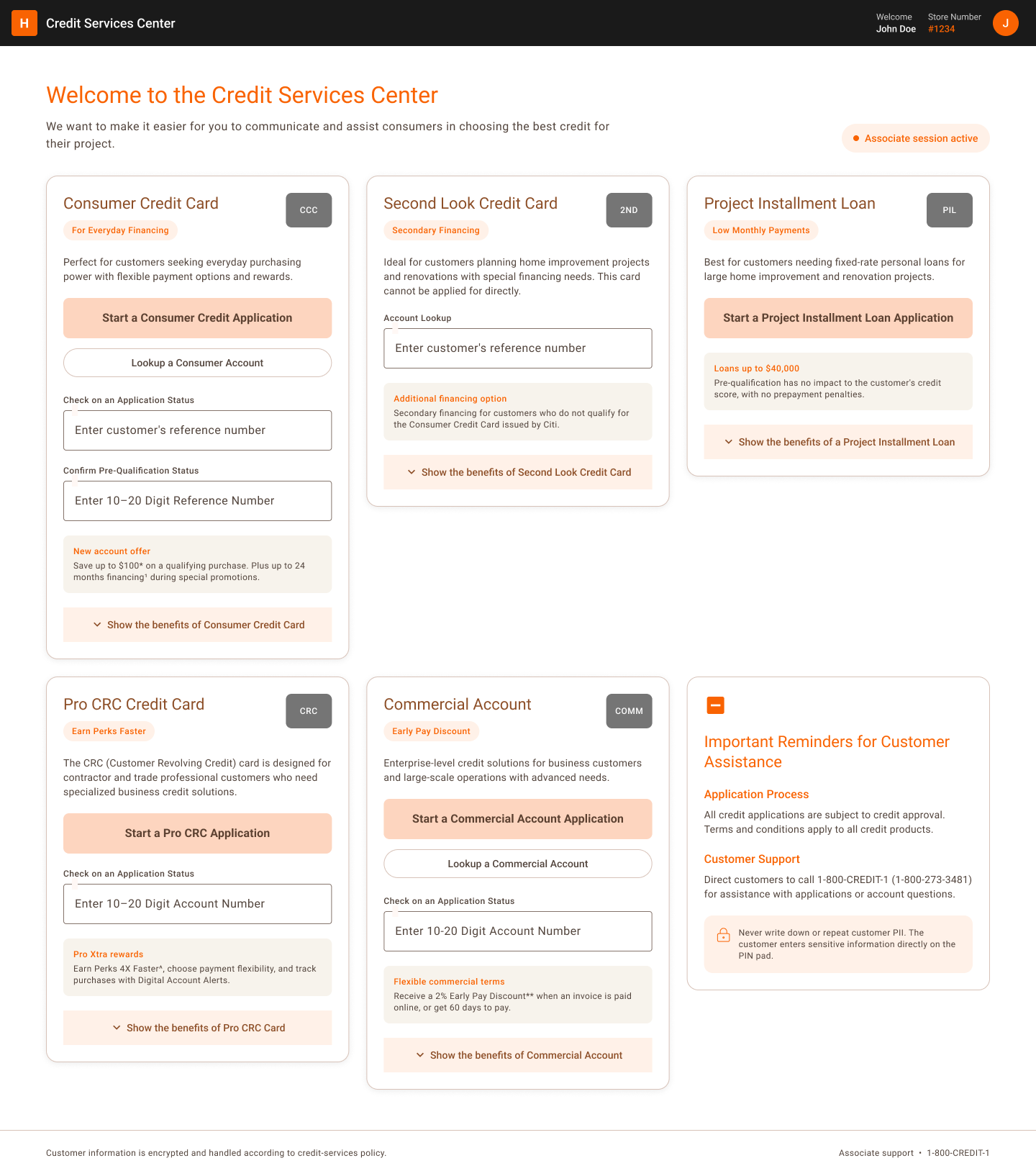
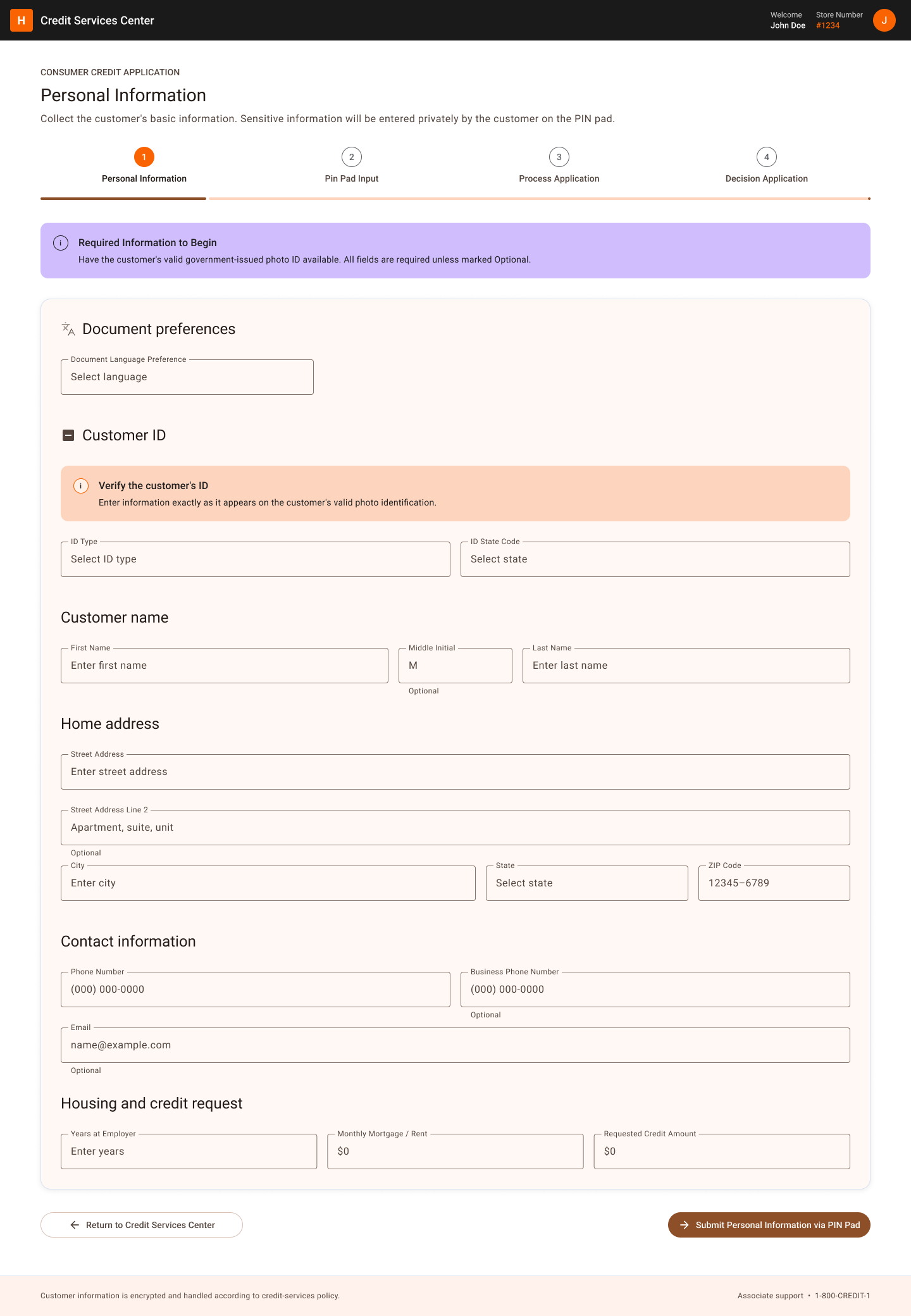
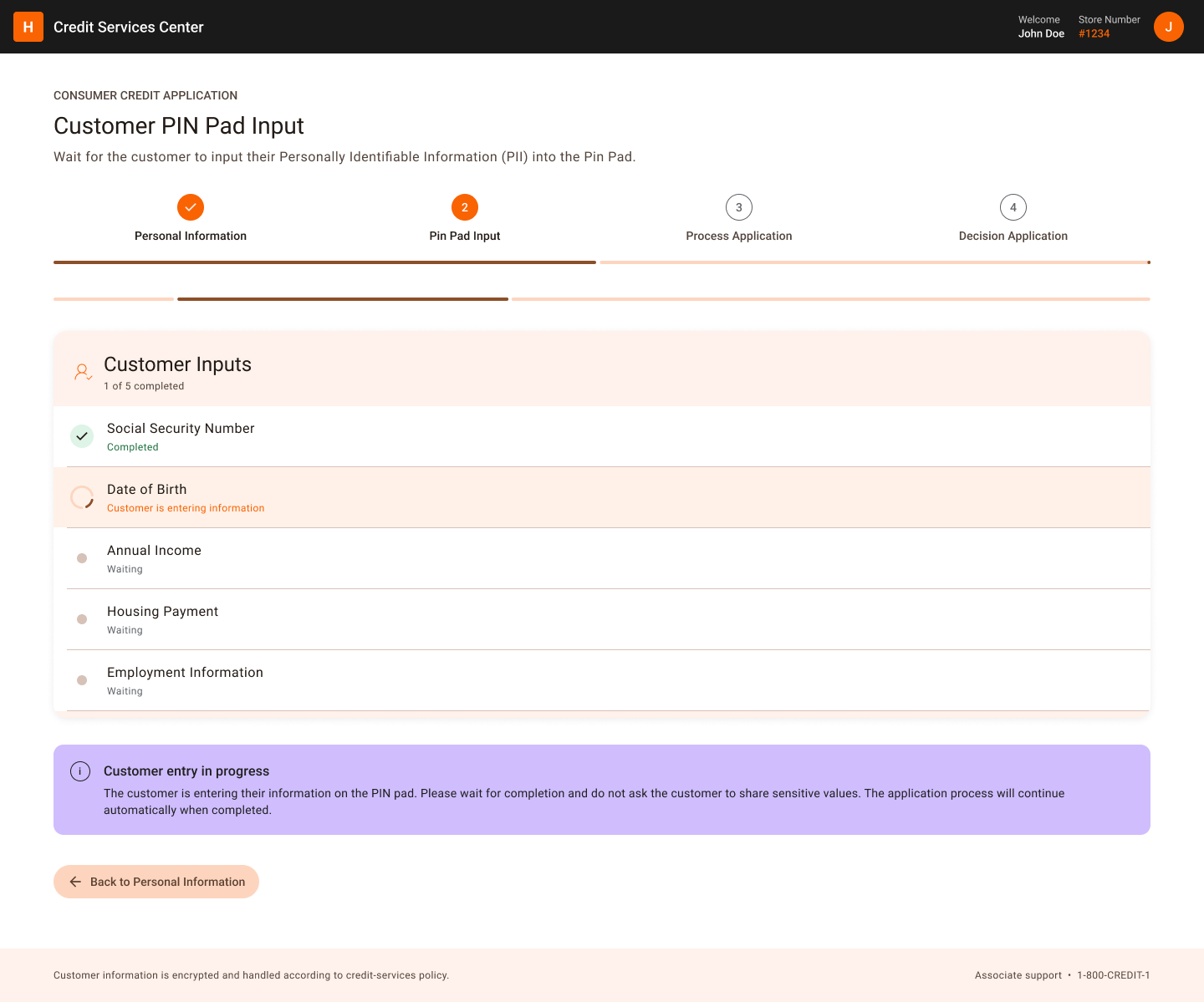
The Challenge
Credit UI work relied on custom components and repeated design handoffs, making consistent changes difficult. I initiated a bounded experiment to test whether shared components, detailed workflow definitions, and AI could support faster collaborative prototyping, not production delivery.
How We Worked
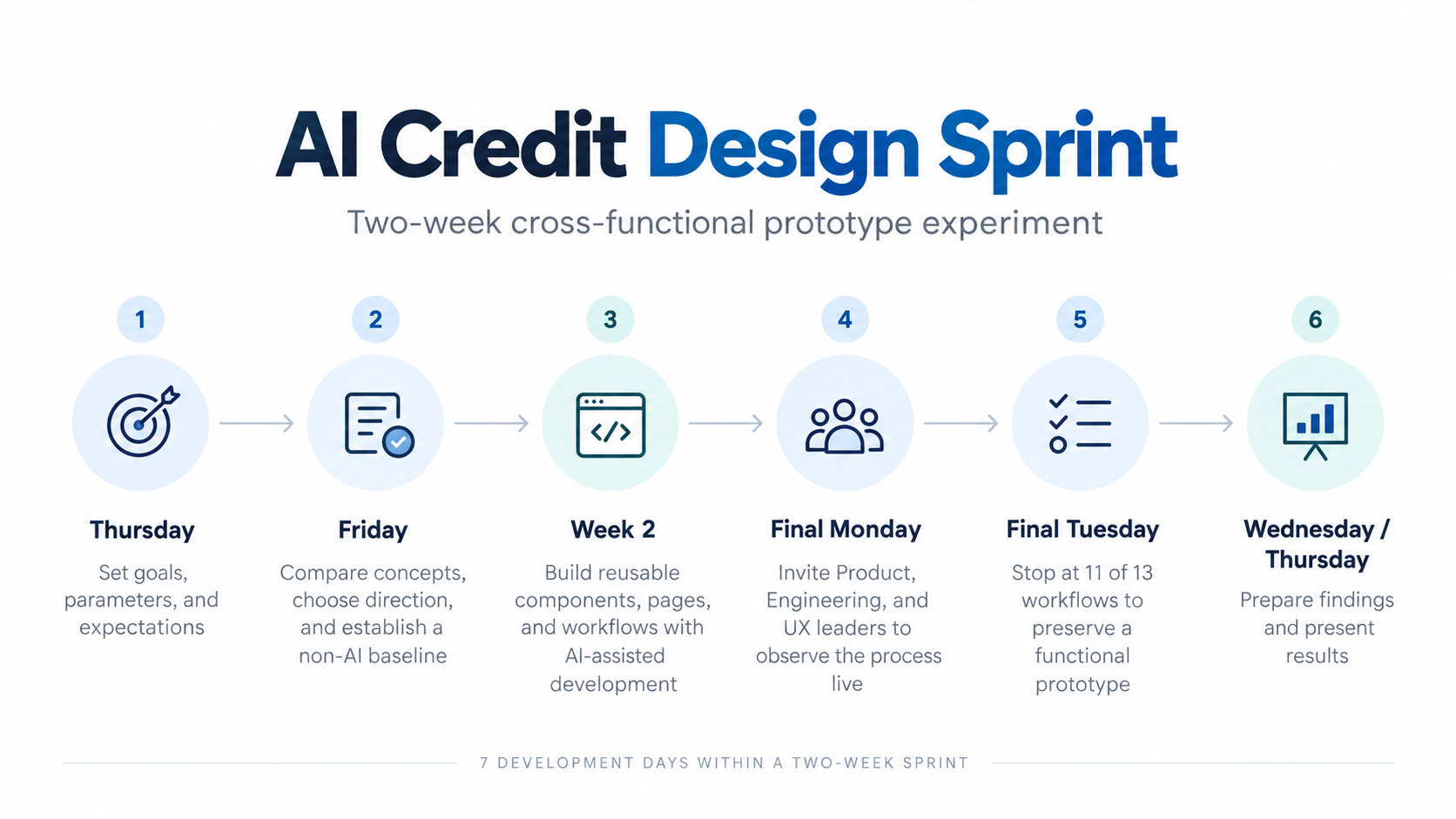
I facilitated the team’s objectives, concept selection, scope, and daily working decisions. We chose a common design direction, manually established reviewed components as a baseline, then paired with Engineering to build pages and workflows using AI-assisted development. I prepared detailed workflow stories to maintain consistency as we scaled.
As the application grew, AI changes slowed and began affecting unrelated workflows. We reorganized code into packages within one prototype, while Engineering reviewed output and the team documented its findings.
The Pivotal Decision
Attempts to add workflows 12 and 13 introduced errors in working flows. I guided the decision to stop at 11, protect the demonstration, and present the limitations rather than risk destabilizing the prototype.
Outcome and Learning
The team demonstrated 11 of 13 workflows and 60+ UI pages in seven development days. Engineering estimated comparable conventional UI work could take 3–6 months; this was not a controlled comparison or production time saved.
We presented findings to UX, Product, and Engineering audiences, including leadership. The experiment demonstrated a repeatable approach to creating reviewable prototypes and exposed limits of AI-assisted development at larger scope. Production adoption and user outcomes were not established.
Beyond the Sprint: Multi-Channel Expansion
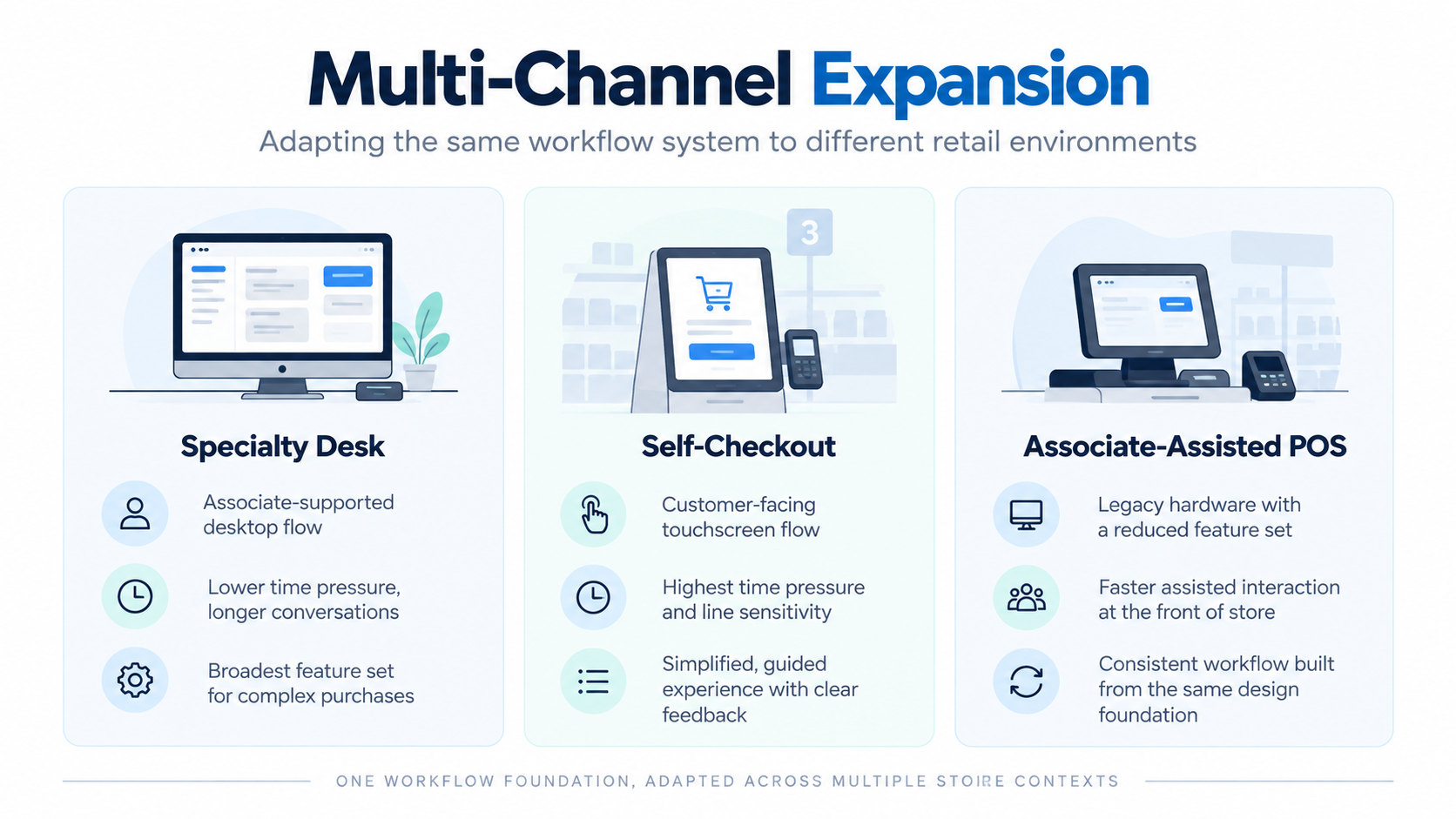
In the next two weeks, I independently completed the remaining workflows and adapted the prototype for specialty desk, self-checkout, and assisted registers. Each retained the shared workflow foundation while responding to different hardware, privacy, accessibility, and time pressures. These were demonstrations, not deployed or user-tested systems.
Beyond the Interface: Future Credit Experience Proposal
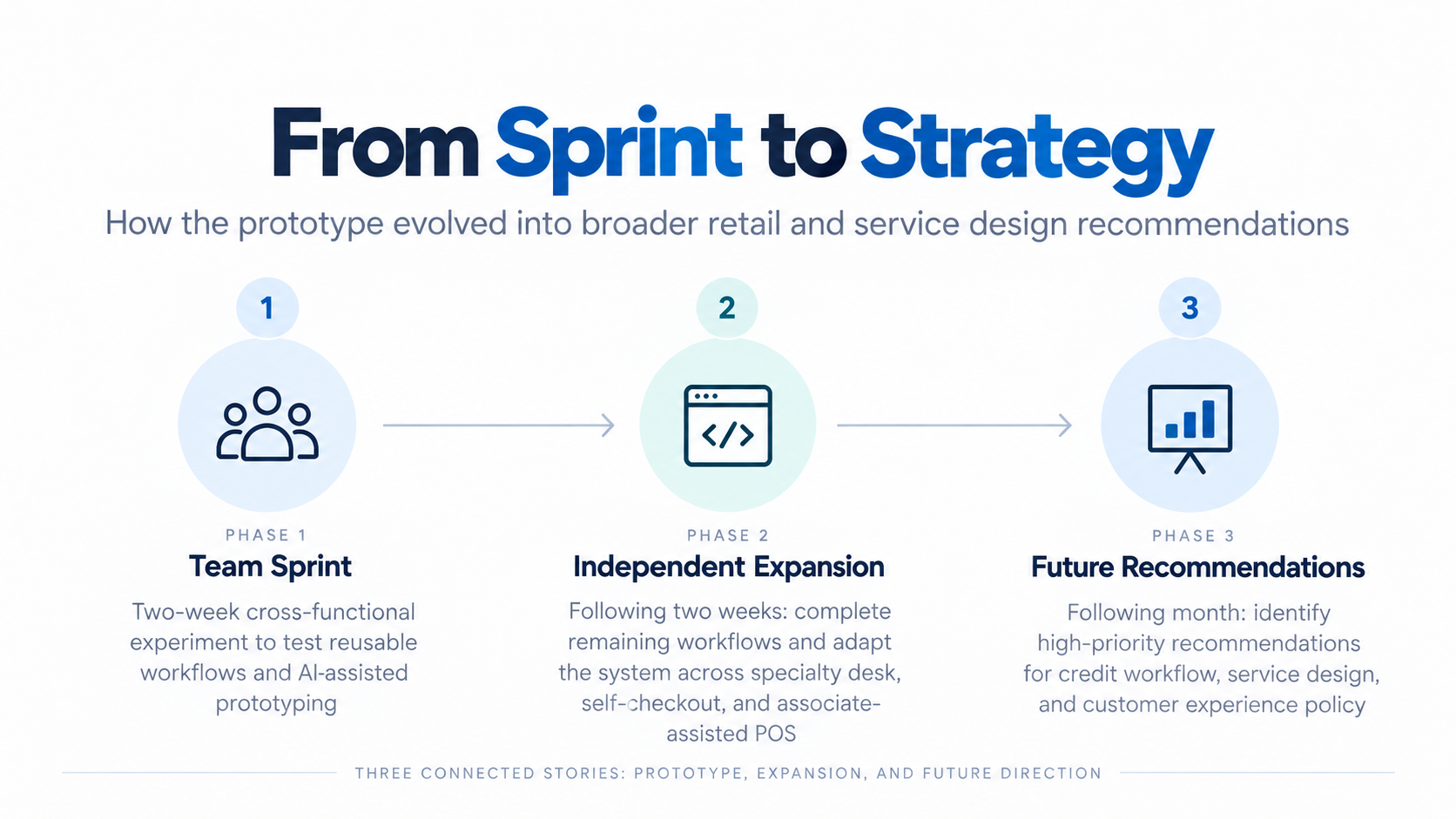
In the following month, I proposed improvements to credit application speed, discreet status communication, recovery, customer consent, and the handoff from Credit to Loyalty and purchase history. These were future service and policy recommendations, not implemented outcomes.
Evidence note
Based on firsthand recollection and available documentation. Internal materials remain confidential; specific estimates and outcome limitations are noted where relevant.